


If you've spent any time in the baby aisle or scrolling parenting forums, you'll have seen omega-3 mentioned everywhere – usually alongside a photo of salmon and a promise about "brain food". Let's slow down and look at what omega-3 actually does inside a growing body.
What Is Omega-3 and Why Does It Matter for Children?
Omega-3s are essential fatty acids the body cannot make from scratch. The main types: ALA (plant foods), EPA (oily fish – involved in regulating inflammation and may improve attention in children with ADHD), and DHA (oily fish – structurally most important for brain and eyes).
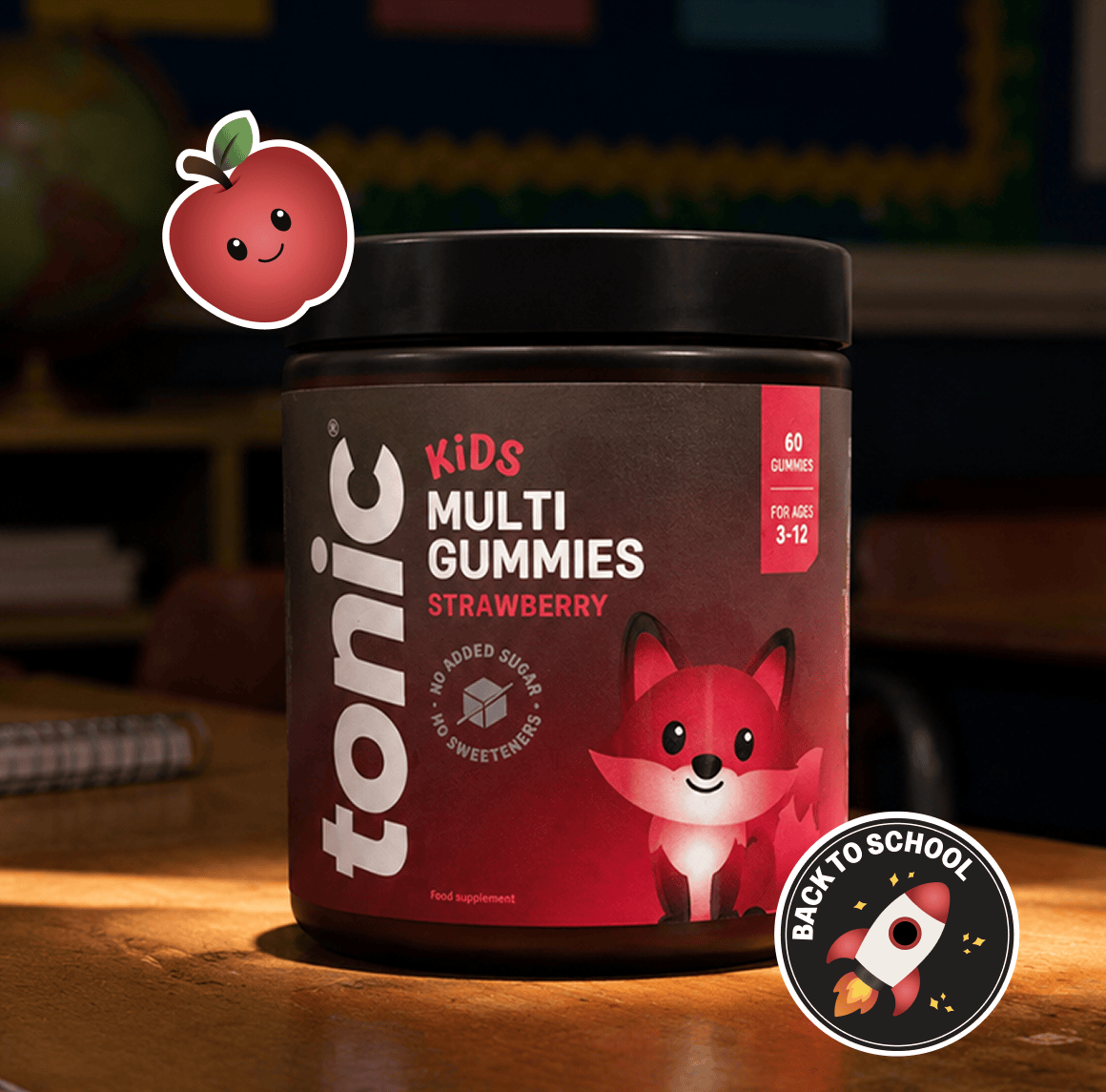
The body can convert ALA into EPA and then DHA, but this pathway is notably inefficient – often converting only 4–8%. If getting these nutrients through food isn't possible, supplements may be a necessary consideration – which is why Tonic made Kids Omega-3 Gummies with no sugar and no artificial sweeteners.

10 Ways Omega-3 Can Support Your Child's Brain and Body
1. Supports Brain Development
DHA accumulates rapidly in the brain during childhood. Children's relative need for DHA is higher than an adult's. DHA keeps neuronal membranes fluid, allowing brain cells to send and receive signals efficiently.

2. May Support Healthy Vision Development
DHA is heavily concentrated in the retina. Adequate DHA is associated with normal visual development in infancy and early childhood.
3. Associated With Supporting Focus and Concentration
A systematic review and meta-analysis found that omega-3 fatty acid levels were consistently lower in children with attention difficulties. If concentration is a concern, our article on nootropics and vitamins for ADHD looks at the wider evidence.
4. Can Form Part of a Healthy Routine for Mood Balance
EPA supports the production of signalling molecules that help resolve inflammation in the brain, which is increasingly linked to mood regulation.
5. Contributes to Healthy Cell Membranes Throughout the Body
Every cell in the body is wrapped in a membrane built partly from fat. Omega-3s help keep these membranes flexible – relevant for babies, growing children, teenagers and adults alike.
6. Supports Normal Growth and Development
Adequate intake is considered a foundational part of normal childhood nutrition alongside protein, iron and zinc.
7. May Support a Healthy Heart Long-Term
A recent systematic review and meta-analysis in overweight and obese children found omega-3 supplementation associated with modest improvements in triglyceride levels.
8. Associated With Healthy Skin
Some research has explored omega-3 supplementation for children with eczema as a supportive measure alongside standard care.
9. Can Support Joint and Bone Health as Children Lead Active Lifestyles
The same anti-inflammatory signalling EPA supports elsewhere in the body is also relevant to joint tissue.
10. Contributes to Overall Balanced Nutrition Alongside Other Nutrients
Omega-3 sits alongside vitamin D, iodine, selenium and protein as part of a wider pattern of balanced eating.
Best Food Sources of Omega-3 for Kids
Salmon, mackerel, sardines, trout and some fresh tuna. NHS guidance suggests boys can have up to 4 portions of oily fish a week; girls no more than 2. Children under 16 should avoid shark, swordfish and marlin.
For vegetarian, vegan or fish-avoiding families: walnuts, chia seeds, ground flaxseed and hemp seeds all provide ALA – though conversion to EPA/DHA is typically only 4–8%.

Is My Child Getting Enough Omega-3?
In the latest National Diet and Nutrition Survey, 86% of adults and 94% of children don't eat fish.
If your child avoids fish, Tonic's Kids Multivitamin Gummies and Kids Omega-3 Gummies are there to fill nutritional gaps. Before giving any fish oil or omega-3 supplement to a young child, speak to your GP, health visitor, or a registered dietitian or nutritionist first.

This article is for informational purposes only and does not constitute medical advice. Please consult a GP, health visitor, or registered dietitian or nutritionist before giving supplements to young children.
About the Author
Natalie Louise Burrows is a registered nutritional therapist (BANT, CNHC) and clinic director at Integral Wellness – a nutrition and health clinic specialising in cardio-metabolic health. Along with her clinic team of nutritionists, they help men and women regain their energy, control their cravings and avoid and reverse type 2 diabetes. They also address health conditions such as high blood pressure, high cholesterol, insulin resistance, fatty liver and heart disease, and weight challenges.


Leave a comment
All comments are moderated before being published.
This site is protected by hCaptcha and the hCaptcha Privacy Policy and Terms of Service apply.