

What It Does and Why Most Supplements Are Missing a Trick
Biotin doesn't get the attention it deserves. It sits quietly in the B-vitamin family, often overshadowed by B12 or folate, and most people couldn't tell you what it actually does.
That's worth fixing – because biotin contributes to something most creatine supplements entirely overlook: normal psychological function.
Here's what biotin is, what it does in the body, and why pairing it with creatine monohydrate is a more considered approach than most formulas on the market.
What Is Biotin (Vitamin B7)?
Biotin is a water-soluble B vitamin – also known as vitamin B7, or occasionally vitamin H. Like all B vitamins, it's not stored in the body in significant amounts, which means consistent daily intake matters.
It functions primarily as a coenzyme – a molecule that enzymes need in order to do their job. Specifically, biotin is essential for carboxylase enzymes: the enzymes involved in metabolising carbohydrates, fats and proteins, and in synthesising fatty acids.
Biotin is found in eggs (particularly egg yolks), liver, salmon, dairy and some nuts and seeds. Deficiency is uncommon in people eating a varied diet, but prolonged antibiotic use and high raw egg white consumption can interfere with absorption.

What Does Biotin Contribute To?
Energy Metabolism
Biotin is a cofactor for several carboxylase enzymes at the centre of energy metabolism. Pyruvate carboxylase plays a key role in gluconeogenesis. Propionyl-CoA carboxylase is involved in the breakdown of certain amino acids and odd-chain fatty acids.
Psychological Function and Mental Clarity
The European Food Safety Authority (EFSA) recognises that biotin contributes to normal psychological function. This reflects biotin's role in the nervous system, particularly its involvement in the metabolism of neurotransmitter precursors and the maintenance of myelin.

Macronutrient Metabolism
Biotin contributes to normal macronutrient metabolism – meaning the breakdown and utilisation of carbohydrates, fats and proteins.
How Much Biotin Do You Need?
The EU Nutrient Reference Value (NRV) for biotin is 50mcg per day. At higher doses – such as the 500mcg per maintenance dose in Tonic's Creatine + Brain – it remains safe for most healthy adults, with no established upper limit set by EFSA. High-dose biotin supplementation can interfere with certain thyroid and troponin blood tests, so it's worth flagging to your GP if you're having blood work done.
Why Biotin and Creatine Are a Logical Pairing
Creatine Powers the Body – Biotin Supports the Mind
Creatine monohydrate's physical performance benefit is well-established. The brain is also energy-intensive – accounting for roughly 20% of the body's total energy expenditure despite making up around 2% of body weight. Creatine is found in the brain as well as muscle.
Biotin operates on a different but complementary pathway. Where creatine supplies the fuel, biotin supports the underlying neurological infrastructure.
What Most Creatine Supplements Leave Out
The vast majority of creatine products on the market are single-ingredient formulas. Most standalone creatine products do nothing to support the cognitive side of the equation. The formula starts and stops at creatine.
The Full Formula: Creatine + Brain Explained
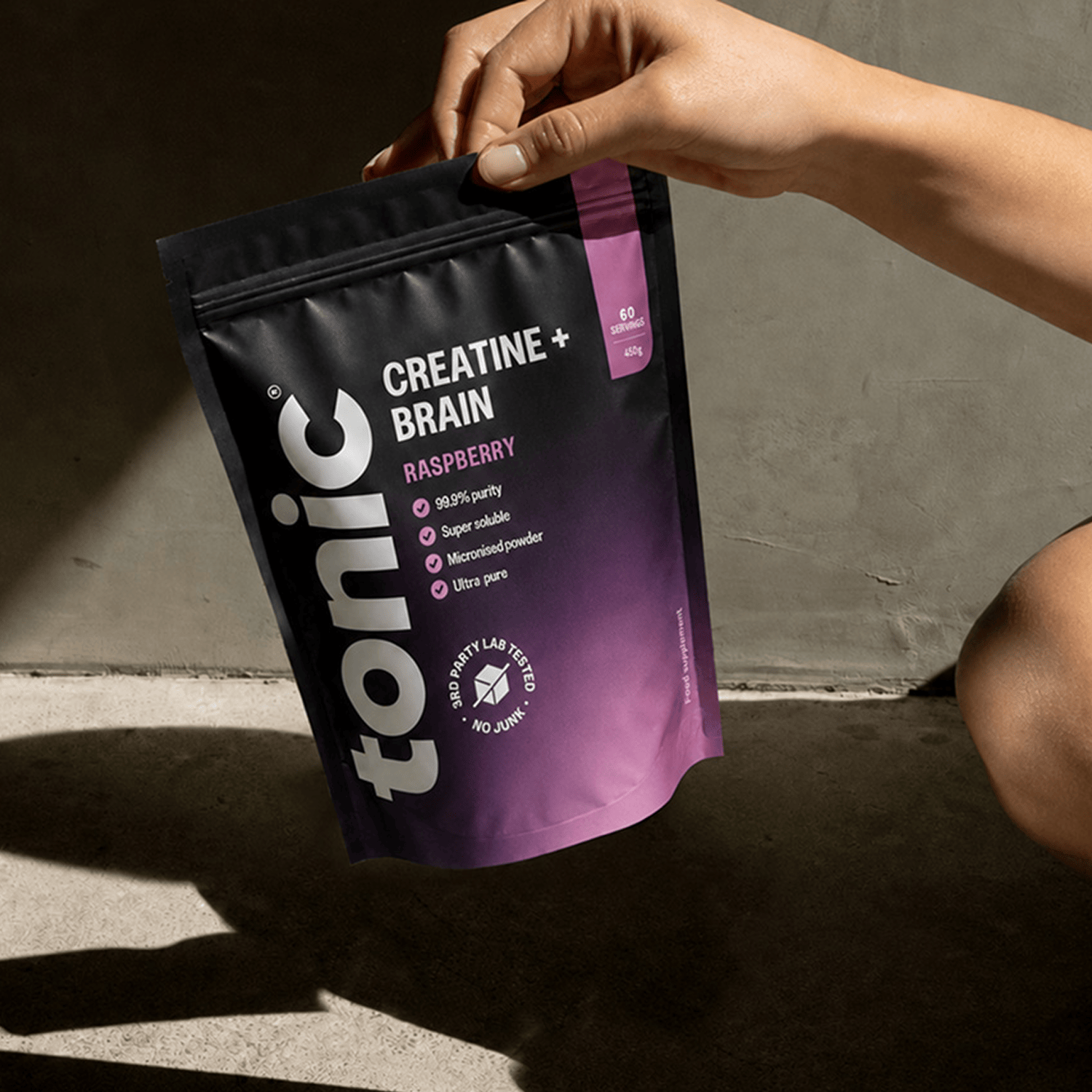
Tonic's Creatine + Brain was built around one question: what does a thoughtful creatine supplement look like when you consider the brain as well as the body?

Creatine Monohydrate – 5,000mg per maintenence dose
99.9% pure, micronised creatine monohydrate. No fillers, no bulking agents. Dissolves cleanly without grittiness. Vegan-friendly, no added sugar, no artificial sweeteners.
Taurine – 1,000mg
Supports energy metabolism and plays a role in cellular hydration. Naturally declines with age. Most creatine products omit it entirely.
Blueberry Extract – 400mg
Rich in anthocyanins – the polyphenolic compounds behind their colour and antioxidant activity. Helps neutralise free radicals produced during intense exercise.
Biotin (Vitamin B7) – 500mcg
At 500mcg per maintenance dose, biotin is included at 1,000% of the NRV – rising to 2,000% NRV at the 15g boost dose. The only ingredient in this category with a permitted claim for psychological function, and the one ingredient most competitors simply do not include.
Who Is Creatine + Brain For?
People who train regularly and care about cognitive performance as well as physical output. People in demanding work environments where mental clarity and energy matter. People who want a clean, well-formulated daily supplement without unnecessary additives.
Creatine + Brain is vegan, free from artificial sweeteners and added sugar, and third-party lab tested. Available in Raspberry and Tropical. From 43p per day on subscription.
Not suitable for children under 9. Those who are pregnant, breastfeeding or under medical supervision should seek advice from a healthcare professional before use.

How to Take It
Maintenance dose: 7.5g (one heaped teaspoon) daily.
Boost/loading dose: 15g (two heaped teaspoons) daily for the first 5–7 days, then return to maintenance.
Most people notice meaningful differences in training output within 2–4 weeks of consistent use.

Key Takeaways
- Biotin (vitamin B7) is a water-soluble coenzyme essential for energy metabolism, macronutrient breakdown and normal psychological function
- Creatine monohydrate has a strong evidence base for physical performance in high-intensity exercise. The brain also relies on creatine-based energy systems
- Biotin and creatine work on complementary pathways – body energy and mental function
- Most creatine supplements are single-ingredient products that address physical performance only
- Tonic's Creatine + Brain combines 5,000mg creatine monohydrate with taurine, blueberry extract and 500mcg biotin per maintenance scoop
This article is for informational purposes only and does not constitute medical advice. If you are taking medication, managing a health condition, or are pregnant or breastfeeding, please consult a qualified healthcare professional before changing your supplement routine. Not suitable for children under 9. High-dose biotin supplementation may interfere with certain blood tests – inform your GP if you are taking biotin and have blood work scheduled.

Leave a comment
All comments are moderated before being published.
This site is protected by hCaptcha and the hCaptcha Privacy Policy and Terms of Service apply.