

The Brain Benefits That Are Surprising Experts
For most of the last three decades, creatine has lived a single life: the gym bag staple that helps you lift heavier, sprint faster and build muscle. If you've ever asked a personal trainer what actually works, creatine is usually near the top of the list.
But a newer body of research is asking a different question. Not "does creatine help on leg day," but "does creatine help my brain after a bad night's sleep, or during a demanding work week?"
As a nutritionist, here's a grounded look at what the research on creatine and cognitive function currently says, who seems to benefit most, and where it still falls short of the headlines.
What Is Creatine, Really?
Creatine is a compound made naturally in the liver, kidneys and pancreas from three amino acids: glycine, arginine and methionine. About 95% of the body's creatine is stored in skeletal muscle, with the remainder found in organs including the brain and heart.
There are concerns that around 60% of people aren't consuming enough creatine to fully saturate their muscles and organs. The average person uses 2g of creatine every day, yet actual intake can be as low as 0.7g for most people, since dietary sources are found mainly in meat and fish. Vegetarians and vegans typically have lower creatine stores than omnivores – a point we'll come back to.
As a supplement, creatine monohydrate is one of the most extensively studied compounds in sports nutrition, with decades of safety data in healthy adults. Caution is needed for people with specific conditions such as kidney disease, and during pregnancy and breastfeeding – if in doubt, seek advice from a healthcare professional.
The Muscle Story We Already Know
The case for creatine's effects on skeletal muscle is well established. Creatine helps regenerate ATP, the body's primary energy currency, during short bursts of high-intensity effort such as sprinting or lifting. Combined with resistance training, it can support gains in strength, power and lean muscle mass – including in older adults.
What's newer, and less widely understood, is that the same energy system creatine supports in muscle also exists in the brain – which is where creatine and cognitive function starts to become a genuinely interesting area of research.

The Emerging Brain Science
How Creatine May Support Brain Energy
The brain is metabolically demanding, using around 20% of the body's energy at rest despite making up only about 2% of body weight. Like muscle, brain cells rely on creatine to support energy metabolism, particularly under high demand or during times of stress.
Although uptake can be slower than skeletal muscle, creatine can cross the blood-brain barrier. Early imaging work showed measurable increases in brain creatine levels on MRI scanning, with the largest changes seen in the thalamus and white matter.
What the Latest Studies Are Finding on Memory and Mental Fatigue
A number of studies have looked at what happens once brain creatine levels rise. Some of the more consistent findings are linked to better performance on memory, attention, processing speed, reasoning and mental sharpness – especially for vegetarians and older adults.
Support for mental fatigue is also showing positive outcomes, with several recent studies suggesting creatine taken around a period of missed sleep may help soften the usual cognitive dip that comes with sleep deprivation, supporting mental sharpness for some hours afterwards.
Who Might Benefit Most From Creatine's Cognitive Effects?
Vegetarians and Vegans
Because dietary creatine comes only from animal foods, vegetarians and vegans tend to start with lower creatine levels in both muscle and brain, which appears to make them more responsive to supplementation. Research so far suggests this group sees more noticeable memory benefits than habitual meat eaters when using creatine.

Older Adults
Creatine production and dietary intake both tend to decline with age, and brain creatine appears to follow the same pattern. This may help explain why studies have reported cognitive benefits of supplementation – particularly for memory – as more consistent in older adults than in younger people. Alongside creatine's well-established role in supporting muscle mass and strength with age, this is feeding fresh interest in creatine as a healthy ageing tool, not just a performance supplement for young gym-goers.
The Sleep-Deprived
Studies on sleep deprivation point to a specific use case: short-term mental fatigue from missed sleep. Single doses taken during a night of sleep loss have been linked to improved cognitive performance and processing speed.

What the Research Doesn't Yet Show
It would be easy to overstate where the science currently sits. In 2024, the European Food Safety Authority (EFSA) assessed the evidence on creatine and cognitive function and concluded that a cause-and-effect relationship could not be established. The UK's Nutrition and Health Claims Committee reached the same conclusion and could not support a health claim for the general healthy adult population.
Both panels noted that any effects seen tended to appear at higher doses than most people would realistically take day-to-day. For skeletal muscle, 3–5g a day is the well-established range, but reaching the levels needed for consistent brain saturation appears to sit higher – closer to 10g a day in some research.
None of this rules out the current research. Improvements in memory, processing speed and mental sharpness have appeared consistently enough to keep researchers interested, even if turning that into an official public health claim takes time.
Effects on overall and executive function have been harder to demonstrate, and there is currently no strong evidence linking creatine to long-term brain health outcomes such as dementia risk. It remains an active area of enquiry, with researchers also looking at where low creatine levels intersect with neurological and cardiovascular health and mental health – with and without SSRIs.
Watch this space.

A Nutritionist's Take: Why Creatine Matters Beyond the Gym
What I find most useful about this research isn't a single headline finding but the pattern. Creatine's cognitive effects seem to appear most reliably in people whose brain creatine stores are already under pressure – vegetarians and vegans who get little to none from food, older adults whose natural production is declining, and anyone running on too little sleep.
That reframes creatine from "the muscle supplement" to something closer to a cog in the energy system the brain also relies on – and one that some of us are simply running low on.
Creatine monohydrate is most commonly used in powder form, added to water and practically tasteless. A few things to keep in mind:
- Start slowly and increase the dose by 1g each week until you reach your desired daily dose. This can help reduce the risk of bloating and digestive discomfort that some people experience.
- Overall evidence suggests creatine monohydrate is safe for healthy people at recommended doses, although above 10g per day is less studied for long-term safety.
- Caution is needed for people with conditions such as kidney disease, and during pregnancy and breastfeeding. If you have a medical condition, seek advice from a healthcare professional.
How Creatine Fits Into a Wider Cognitive Health Routine
Creatine research, however promising, doesn't exist in isolation from the basics. Sleep, blood sugar stability, hydration, stress management and adequate protein all shape how well your brain functions day-to-day, and no single compound replaces them.
If creatine does find its way into your routine, it would sit alongside these foundations – useful for closing a specific nutrient gap, not a substitute for healthy foundations.

Where Tonic Stands on Cognitive Support
Tonic tracks nutrition research closely, including areas like this one. Until recently, Tonic's cognitive support was through Focus + Mind, formulated around lion's mane – a mushroom studied for its potential role in nerve growth factor production and mental clarity – but it does not contain creatine.
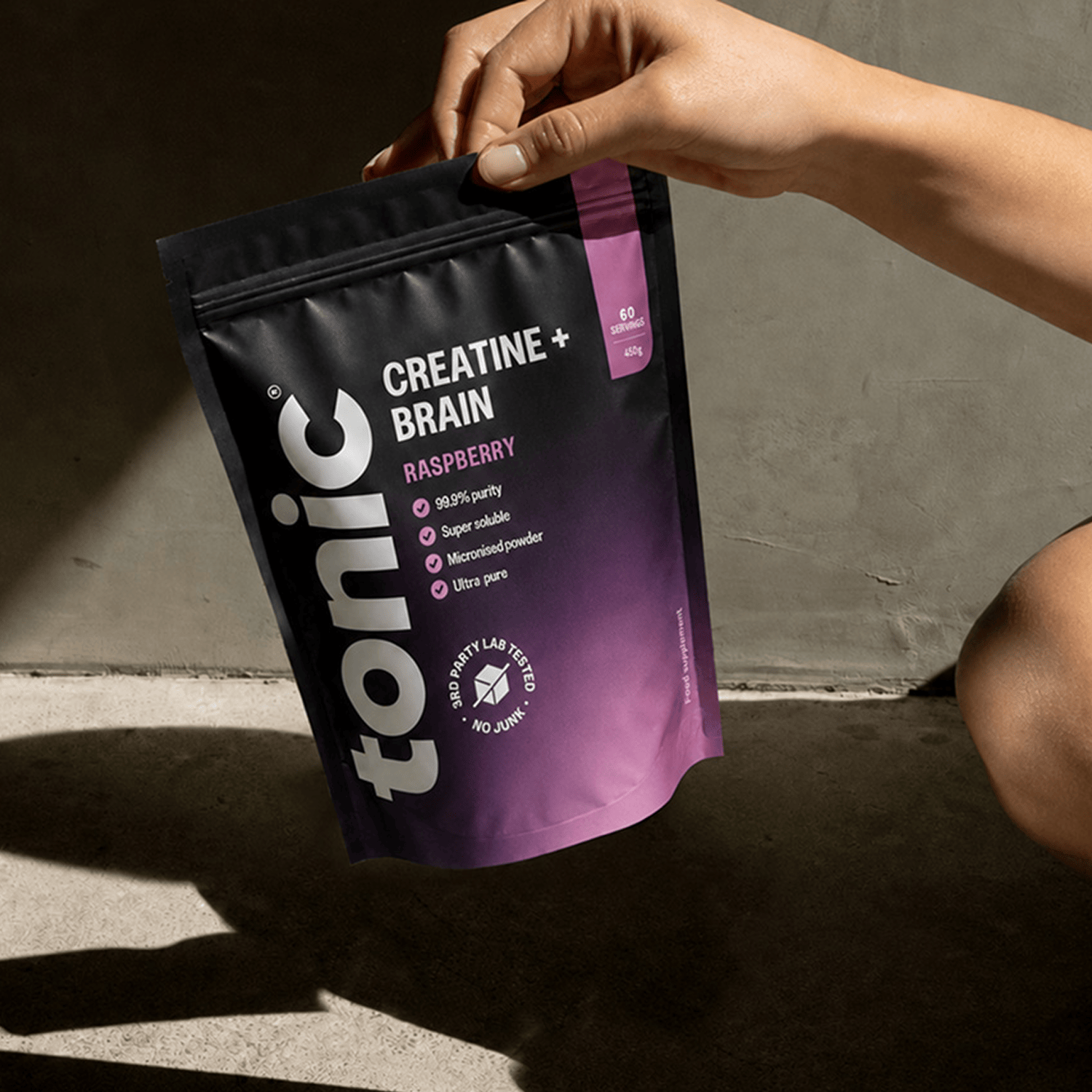
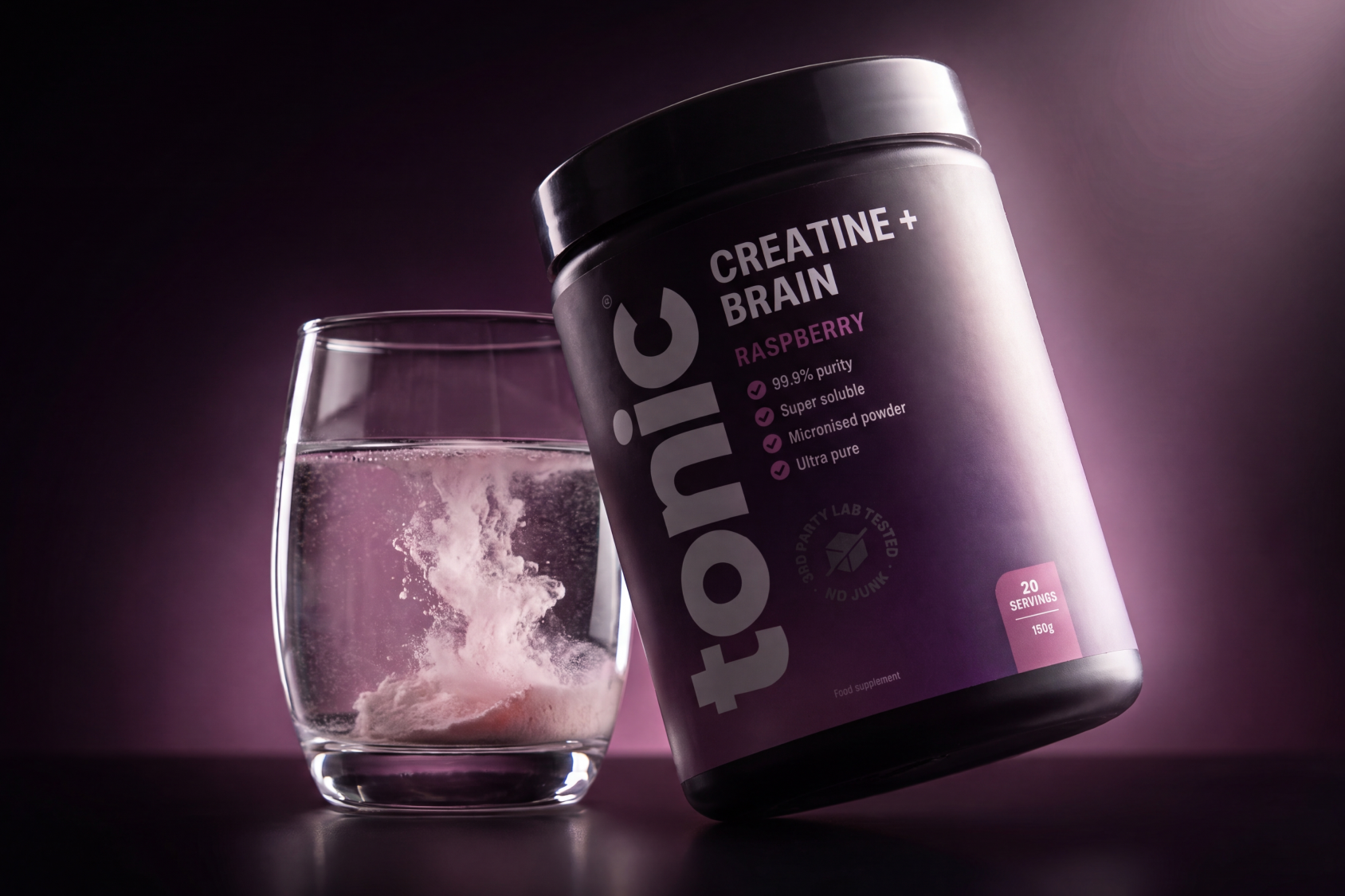
As the research on creatine for brain health develops, particularly around sleep deprivation and mental performance, it's an area we've been watching with interest. Tonic's new Creatine + Brain combines 10g of creatine monohydrate with taurine, biotin (vitamin B7) and blueberry extract, bringing together ingredients specifically chosen to support both physical performance and the brain's energy demands.
The Bottom Line
Creatine's reputation as a muscle supplement is well earned, but it's no longer the whole story. A growing, credible body of research suggests it may support memory, mental fatigue and cognitive performance – particularly in vegetarians, older adults and people dealing with sleep deprivation.
That said, the evidence isn't yet strong enough to justify blanket claims, and regulators have been clear that a proven cause-and-effect relationship doesn't currently exist. The honest position is that this is one of the more promising areas in current nutrition science – worth understanding properly, rather than overselling.
FAQs
Does creatine help memory?
Several studies suggest creatine may support aspects of memory, particularly working memory, with effects more consistent in vegetarians, older adults and people under physical or mental stress. Evidence for a broad memory benefit in well-nourished, well-rested adults is weaker.
Does creatine improve focus, or just mental fatigue?
Most of the strongest evidence relates to mental fatigue; however, attention and processing speed have also shown positive outcomes. For some people, this may feel like improved focus.
Is creatine good for vegetarians' and vegans' brain health?
Vegetarians and vegans typically have lower baseline creatine levels, since dietary creatine comes only from animal foods, and research suggests this group may see a more noticeable cognitive response to supplementation.
How much creatine is needed for brain benefits?
Study doses vary from single high doses of around 0.2 to 0.35g per kilogram of body weight to daily doses of up to 10g over several weeks.
Does Tonic's Focus + Mind contain creatine?
No. Focus + Mind is formulated with lion's mane and other cognitive-support ingredients. For creatine-based cognitive support, see Tonic's new Creatine + Brain.
About the Author
Natalie Louise Burrows is a registered nutritional therapist (BANT, CNHC) and clinic director at Integral Wellness – a nutrition and health clinic specialising in cardio-metabolic health. Along with her clinic team of nutritionists, they help men and women regain their energy, control their cravings and avoid and reverse type 2 diabetes. They also address health conditions such as high blood pressure, high cholesterol, insulin resistance, fatty liver and heart disease, and weight challenges.
This article is for informational purposes only and does not constitute medical advice. If you are taking medication, managing a health condition, or are pregnant or breastfeeding, please consult a qualified healthcare professional before changing your supplement routine.


Leave a comment
All comments are moderated before being published.
This site is protected by hCaptcha and the hCaptcha Privacy Policy and Terms of Service apply.