

We've been watching the research on creatine and cognitive function for a while now. The evidence that creatine does something useful for the brain – particularly around mental fatigue, sleep deprivation and memory – has been building steadily. And yet most creatine products are still positioned entirely around the gym.
That felt like a gap worth closing.
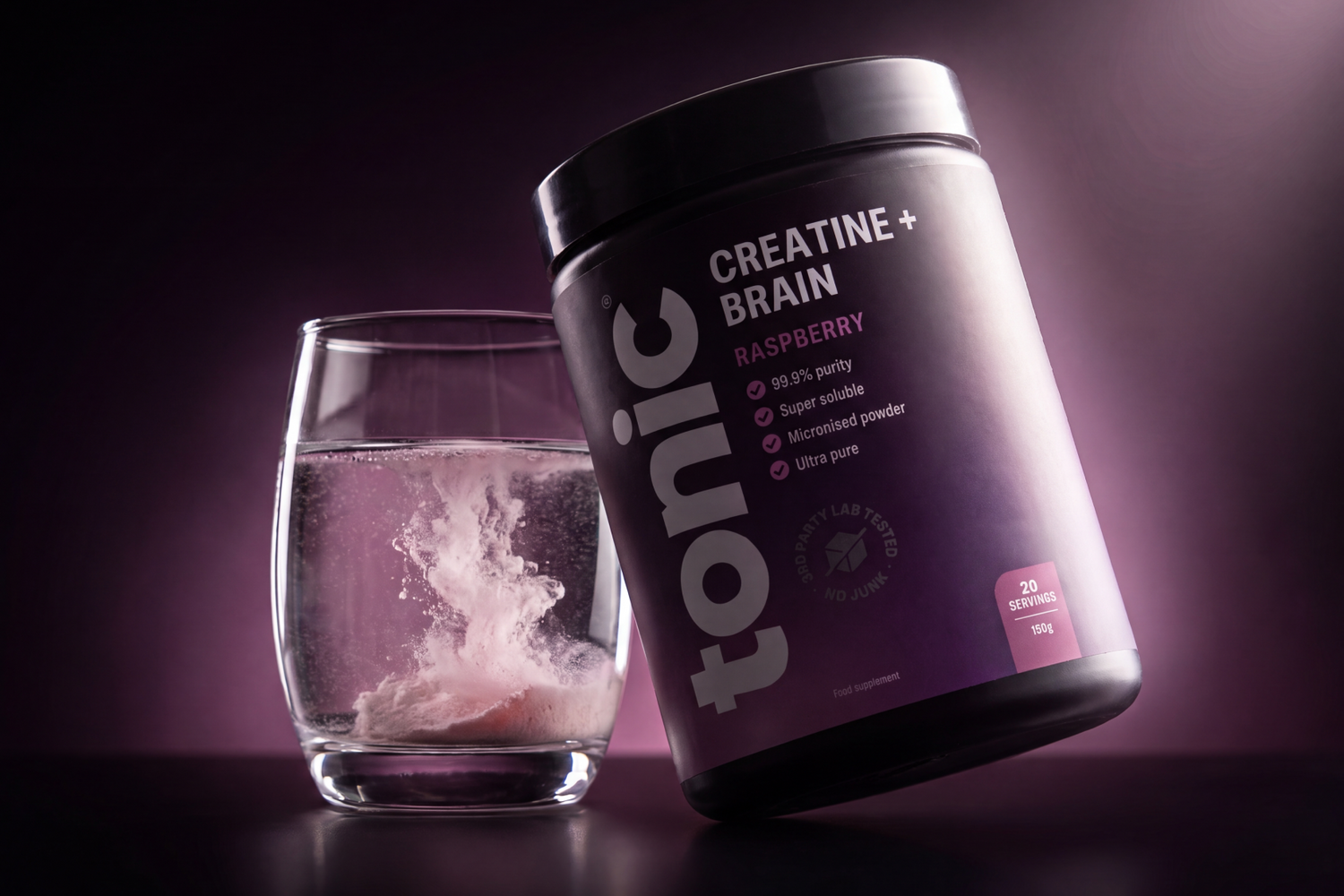
Tonic's new Creatine + Brain is formulated specifically for cognitive performance and physical energy – not just for people who lift weights, but for anyone whose brain is working hard and whose creatine levels might not be keeping up.

Why Creatine for the Brain?
Creatine is best known as a sports supplement, but the brain uses creatine too. It relies on the same ATP energy system that creatine supports in muscle – and under conditions of high demand, stress or sleep deprivation, brain creatine can become depleted in ways that affect how sharp, focused and mentally resilient you feel.
The people most likely to be running low on creatine are vegetarians and vegans (since dietary creatine comes only from animal foods), older adults whose natural creatine production declines with age, and anyone who regularly operates on too little sleep.
Research suggests that for these groups in particular, creatine supplementation may support memory, processing speed and mental sharpness – and that single doses taken around periods of sleep loss may help soften the usual cognitive dip.
We covered this in detail in our deep dive on creatine and brain health – worth reading if you want the full picture on what the science currently shows.

What's in Creatine + Brain?
We didn't want to make another plain creatine powder. We wanted to build something specifically designed to support both brain energy and physical performance, with ingredients chosen to work together.
Creatine Monohydrate – 10g
The most extensively studied form of creatine, with decades of safety data in healthy adults. We use 10g per serving because research into brain-specific effects suggests that saturation of brain tissue may require a higher dose than the 3–5g typically used for muscle performance. This is the foundation of the formula.
Taurine
An amino acid that supports nervous system function and has antioxidant properties in brain tissue. Taurine and creatine have complementary roles in cellular energy metabolism, and taurine appears to support hydration and electrolyte balance within cells – which matters for cognitive function as much as physical performance.
Biotin (Vitamin B7)
Biotin contributes to normal energy-yielding metabolism and normal psychological function. B vitamins are water-soluble and not stored by the body, so consistent daily intake matters – particularly for those with higher energy demands, whether physical or cognitive.
Blueberry Extract
Blueberries are one of the most consistently researched foods for brain health, with their benefits attributed largely to flavonoids. Studies suggest flavonoid-rich foods may improve communication between brain cells, reduce oxidative stress in brain tissue, and support the plasticity that underlies learning and memory. The extract provides a concentrated, consistent dose of these compounds.
Who Is It For?
Creatine + Brain is designed for people who want creatine's benefits beyond the gym – or who want gym benefits alongside genuine cognitive support. Specifically:
- Vegetarians and vegans – who get no dietary creatine and consistently show the most pronounced cognitive response to supplementation
- People who are frequently sleep-deprived – whether through work, parenting or lifestyle, creatine may help soften the cognitive impact of missed sleep
- Older adults – whose natural creatine synthesis declines with age and who show more consistent cognitive benefits from supplementation than younger adults
- Anyone with high cognitive demands – sustained focus, complex problem-solving or high-pressure work
- Active people – who want muscle performance support alongside brain energy support in a single daily formula
How to Take It
Mix one serving with water or a cold drink of your choice. Creatine monohydrate is practically tasteless, and the blueberry extract gives a light, natural flavour without artificial sweeteners.
If you're new to creatine, start with a lower dose and build up gradually over the first week or two. This reduces the risk of the mild digestive discomfort some people experience when starting. Once established, daily consistency matters more than timing.
As with any supplement, if you are pregnant, breastfeeding, or managing a health condition such as kidney disease, please consult a healthcare professional before use.

Where the Research Stands
We want to be straightforward about this. In 2024, both the European Food Safety Authority (EFSA) and the UK's Nutrition and Health Claims Committee assessed the evidence on creatine and cognitive function and concluded that a cause-and-effect relationship cannot currently be established for the general healthy adult population.
That doesn't mean the research isn't compelling – it is – but it does mean we won't be making claims we can't substantiate. What the evidence does consistently show is that memory, processing speed and mental sharpness improvements have appeared in studies, particularly in vegetarians, older adults and people under sleep or cognitive stress. That's who this product is primarily for, and that's the context in which the research is strongest.
We think the honest position is the right one: this is one of the most promising areas in current nutrition science, the research is worth taking seriously, and we'll continue to follow it as it develops.
This article is for informational purposes only and does not constitute medical advice. Creatine + Brain is not intended to diagnose, treat, cure or prevent any disease. If you are taking medication, managing a health condition, or are pregnant or breastfeeding, please consult a qualified healthcare professional before use.


Leave a comment
All comments are moderated before being published.
This site is protected by hCaptcha and the hCaptcha Privacy Policy and Terms of Service apply.