


What They Are and What Might Help
You might be familiar with a late-night knock at the bedroom door, your wide-eyed child rubbing their shins, convinced their legs really hurt. With school runs, clubs and early alarms back in full swing, you might be noticing it more too.
So-called growing pains are one of the most common reasons parents mention their child's leg pain to a GP, and yet the name itself is a little misleading. Here’s what we actually know about why they happen, what tends to help, and when it’s worth getting checked.
What Are Growing Pains?
Despite the name, growing pains don’t appear to be caused by growth itself. The NHS states that “it’s not caused by growing and is not a sign of anything serious”. A large study following Danish preschoolers found no association between rapid growth and how likely a child was to report growing pains. The leading theories point to muscle fatigue after a very active day, joint hypermobility, or a lower pain threshold, though Cleveland Clinic notes low vitamin D and family history may also play a role.
Growing pains most commonly affect children aged three to twelve. They tend to be more common in children who are particularly active, and in those with joint hypermobility or flat feet.
Common Signs Parents Notice
- Aching or throbbing in both legs, not just one
- Pain in the shins, calves, thighs or behind the knees
- Symptoms in the late afternoon, evening or overnight
- No pain, swelling or limping the following morning
- Pain that eases with a cuddle, massage or paracetamol

When to Speak to Your GP
See your GP if the pain is in one leg only, during the day, severe enough to affect walking, or comes with swelling, redness, fever or unexplained weight loss.
What May Help
Gentle massage, a warm bath before bed, or a covered heat pack are all commonly recommended comfort measures. More habits that support sleep quality here.
The NHS advises all children aged one to four take a daily vitamin D supplement. Magnesium contributes to normal muscle and nervous system function and may help muscles relax. A Cochrane review found only limited evidence for magnesium and muscle cramps specifically – so think of these nutrients as supporting general development rather than a guaranteed fix.
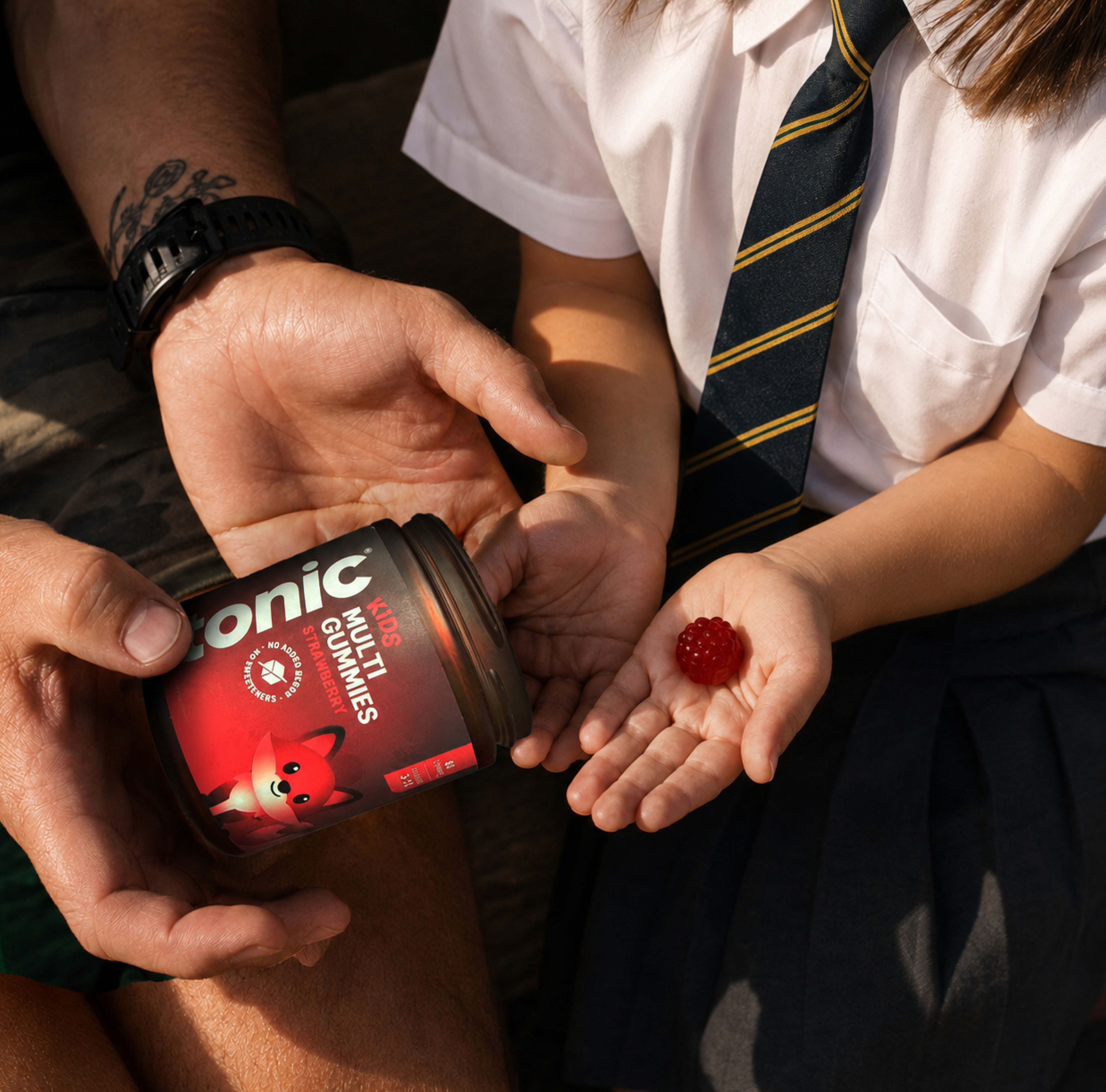
Tonic’s Kids Multi Gummies provide vitamin D3 at 200% of a child’s daily reference intake alongside vitamin C, E, folate, B12, B6, zinc and iodine.

Tonic’s Kids Calm Gummies combine 120mg of magnesium citrate with chamomile, lemon balm and 3g of fibre, taken as two gummies roughly an hour before bed.
This article is for informational purposes only and does not constitute medical advice.
About the Author
Natalie Louise Burrows is a registered nutritional therapist (BANT, CNHC) and clinic director at Integral Wellness.



Leave a comment
All comments are moderated before being published.
This site is protected by hCaptcha and the hCaptcha Privacy Policy and Terms of Service apply.