


Supplements From October – and How to Choose the Right One
As the clocks start their slow shift towards winter, there’s one piece of advice I repeat to practically every client I see this time of year: take your vitamin D. It’s not a personal opinion or a trend – it’s official NHS guidance, and it applies to nearly all of us in the UK.
Research drawing on the National Diet and Nutrition Survey found that 31% of UK adults are vitamin D deficient by the end of winter, rising to over a third of teenagers.
What Is the NHS Guidance on Vitamin D?
The NHS advises that everyone in the UK should consider taking a daily supplement containing 10 micrograms (400 IU) of vitamin D during autumn and winter, roughly October to March. For children aged one to four, supplements are advised year-round. Breastfed babies generally need 8.5 to 10 micrograms daily from birth.
Some groups are advised to supplement all year: anyone who is rarely outdoors, covers most of their skin, or has darker skin.

Why Can’t We Get Enough Vitamin D From Sunlight in Winter?
Between October and early March, the sun sits too low in the UK sky for its UVB rays to reach us with any real strength. However sunny a crisp October afternoon looks, your body isn’t making meaningful vitamin D from it.
What Does Vitamin D Contribute To?
Vitamin D is an immune modulator. Adequate levels help the immune system respond appropriately to pathogens without tipping into excessive inflammation.

It helps the body absorb calcium and maintain bone mineral density – long-term deficiency is linked to osteoporosis, affecting around half of women and a fifth of men over 50. In children, severe deficiency can lead to rickets – a condition that had all but disappeared but has made a concerning comeback, with 432 UK hospital admissions in 2022 alone. The NHS recommends children from 0 months to age 4 take a daily vitamin D supplement.
Vitamin D3 vs D2
D3 raises and sustains blood vitamin D levels more effectively than D2 at an equivalent dose. Lichen-derived D3 is available that’s both potent and vegan-friendly – which is the form Tonic uses.

What to Look For
Adults: Tonic Adults Multi Gummies contain 15 mcg (600 IU) of vitamin D3 alongside 14 vitamins, minerals and plant actives.
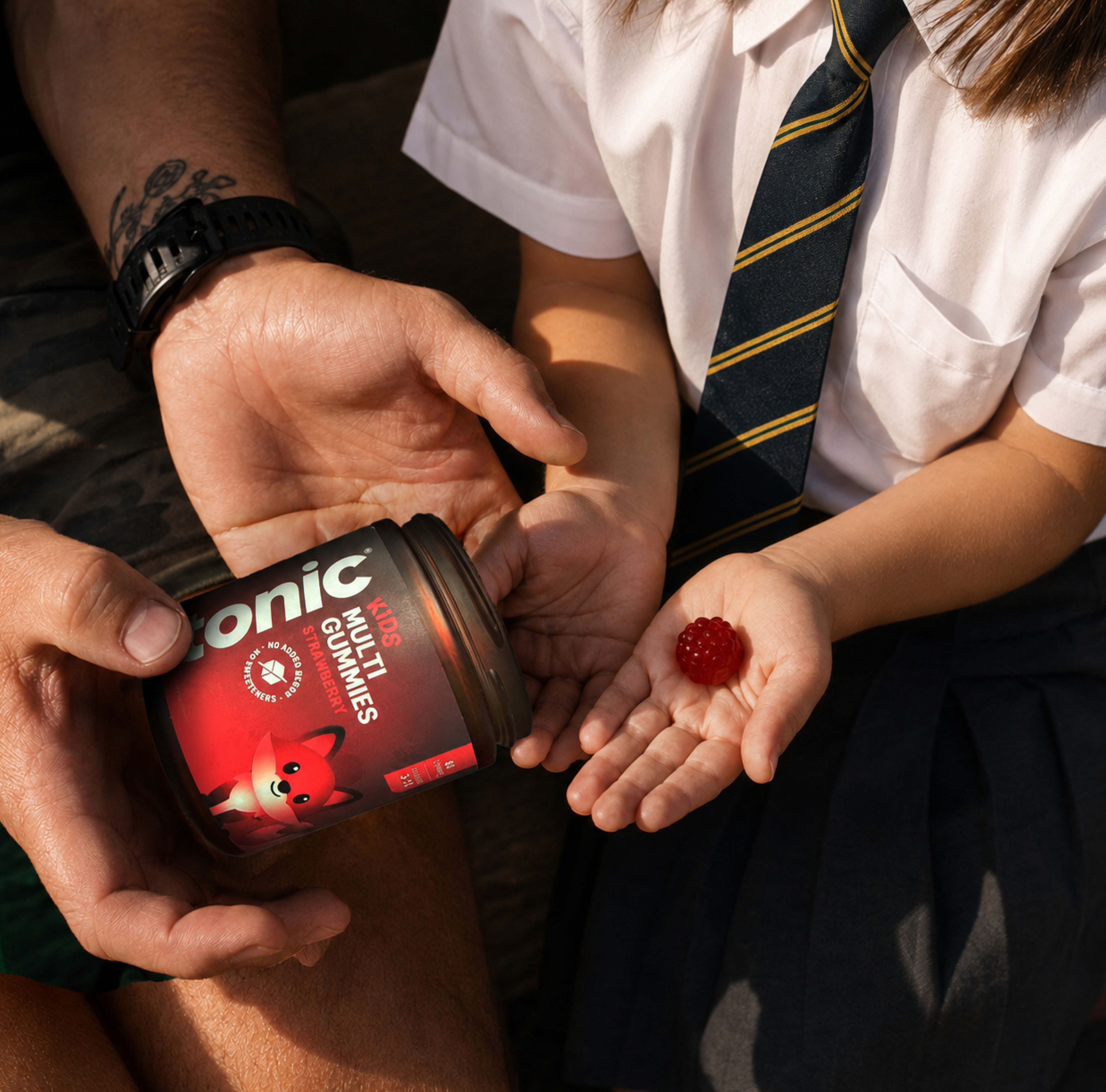
Kids: Tonic Kids Multi Gummies provide 10 mcg of vitamin D3 per serving, in line with NHS guidance, in a sugar-free strawberry gummy.
Baby: Tonic Baby Multi Drops deliver 10 mcg of vitamin D3 per 1ml serving, appropriate for 6 months+.

Start in October, not when the first cold snap hits. Attach it to something you already do daily – by the kettle, the toothbrush or the school bag.
This article is for informational purposes only and does not constitute medical advice.
About the Author
Natalie Louise Burrows is a registered nutritional therapist (BANT, CNHC) and clinic director at Integral Wellness.


Leave a comment
All comments are moderated before being published.
This site is protected by hCaptcha and the hCaptcha Privacy Policy and Terms of Service apply.