

It's back-to-school season, which means lunchboxes are back on the daily to-do list. Most of us are trying to pack something healthy – but a lot of the foods marketed as lunchbox-friendly are quietly loaded with sugar. Think cereal bars, flavoured yoghurts, dried fruit, fruit pouches, smoothies. They look wholesome on the box, but the label often tells a different story.
Here's the sobering fact: the typical child's lunchbox can contain up to five times the NHS recommended daily amount of sugar for children. The NHS recommends that children aged four to six consume no more than five teaspoons of free sugar a day – yet many lunchboxes quietly pack in upwards of twenty-five teaspoons.
What Children Are Actually Supposed to Have
In the UK, the NHS guidance on free sugars (added sugars, plus those in honey, syrups and unsweetened juices) is:
- Ages 4–6: no more than 19g of free sugar a day – roughly 5 teaspoons
- Ages 7–10: no more than 24g of free sugar a day – roughly 6 teaspoons
- Adults: no more than 30g of free sugar a day – roughly 7 teaspoons
That's the whole day's allowance – breakfast, lunch, snacks and dinner combined. And here's the problem: a single flavoured yoghurt, a fruit-and-nut bar, and a juice pouch can easily use up that entire daily allowance before your child has even finished lunch.
Where the Sugar Hides
The sneakiest part isn't the obvious stuff – a biscuit or a chocolate bar. It's the foods that look healthy on the front of the packet:
- Flavoured or 'kids' yoghurts and fromage frais – often 10–13g of sugar per small pot, more than a similar-sized portion of ice cream in some cases
- Cereal and fruit-and-nut bars – many contain 8–12g of sugar per bar, similar to a couple of chocolate biscuits
- Fruit smoothies and juice pouches – even 100% fruit versions can contain 15–20g of sugar per serving, all of it free sugar once the fruit is juiced or blended
- Dried fruit snacks – nutritious in small amounts, but easy to overdo as they're sugar-dense and moreish
- Flavoured milk drinks – can carry a similar sugar load to a soft drink
None of these are bad foods, and they don't need to be banned. The issue is that when several of them turn up in the same lunchbox on the same day, sugar adds up fast without you or your child noticing.

A Quick Lunchbox Comparison
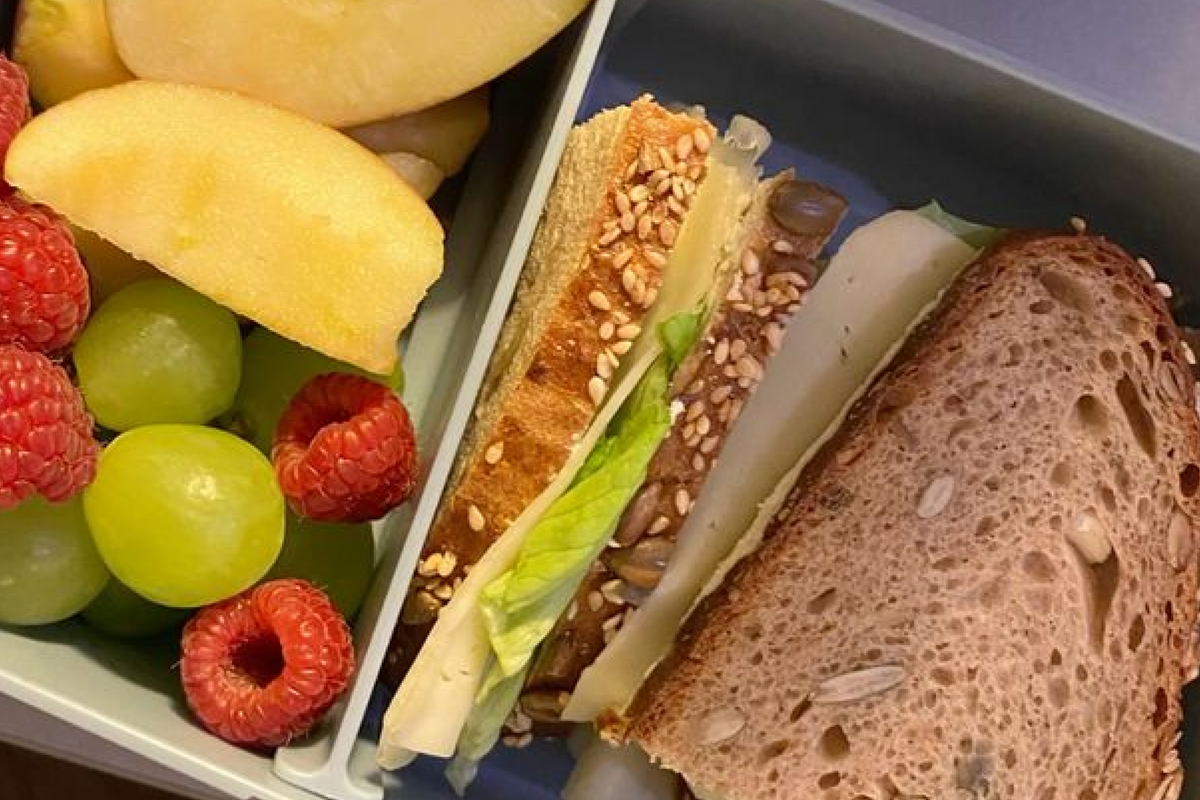
The difference between two lunchboxes with almost identical shape – yoghurt, bar, fruit – can be dramatic, simply because of which version of each food was chosen. Lunchbox A can easily exceed double a young child's entire daily sugar allowance before the school bell rings for home time. Lunchbox B comes in at a fraction of that.
That's really the whole game: you don't need to overhaul what you're packing. Just swap the sugariest version of each item for a lower-sugar one.
Simple Sugar Swaps
| Instead of... | Try... |
|---|---|
| Flavoured yoghurt | Greek yoghurt + fresh fruit |
| Fruit-and-nut bar | Homemade oat or date bar |
| Fruit smoothie pouch | Whole fruit |
| Fruit juice | Water, or milk |
| Flavoured milk | Plain milk |
| Cereal bar | Plain nuts, seeds and a little dried fruit |
| Shop-bought dip | Homemade hummus or tzatziki |
Reading the label helps too. Sugar can be listed as sucrose, glucose, fructose, corn syrup, or "fruit concentrate" – so it's worth checking the nutrition panel rather than the front-of-pack claims.
Recipes to Make Sugar Swaps Easy
Here are three simple, low-sugar recipes that hold up well in a lunchbox and are quick enough for a Sunday prep session.
No-Added-Sugar Oat & Date Energy Balls
Blend pitted dates, rolled oats, a spoon of nut butter and a splash of milk in a food processor until it clumps together, then roll into balls and chill. The natural sweetness of the dates does all the work – no added sugar needed. These freeze well, so make a double batch.

DIY Fruit & Yoghurt Pot
Greek yoghurt with fresh or frozen berries and a few oats in a small reusable container, assembled the night before. By lunchtime it tastes like a dessert, but has a fraction of the sugar of a flavoured yoghurt pot.

Savoury Veggie Muffins
Whisk eggs with grated carrot, courgette and a little cheese, then bake in a muffin tin. These make a filling, sugar-free alternative to a sweet muffin or cereal bar, and freeze beautifully for busy mornings.
The Takeaway
You don't need to eliminate every sweet treat from the lunchbox – the odd biscuit or small chocolate treat is fine.
The goal is simply awareness: knowing which everyday "healthy-looking" foods are quietly using up your child's whole daily sugar budget, and having a few lower-sugar staples ready to swap in. A little label-reading and some Sunday prep go a long way toward a lunchbox that's genuinely better for growing bodies – and for concentration in the classroom come 2pm.
Gummy Vitamins Without the Sugar
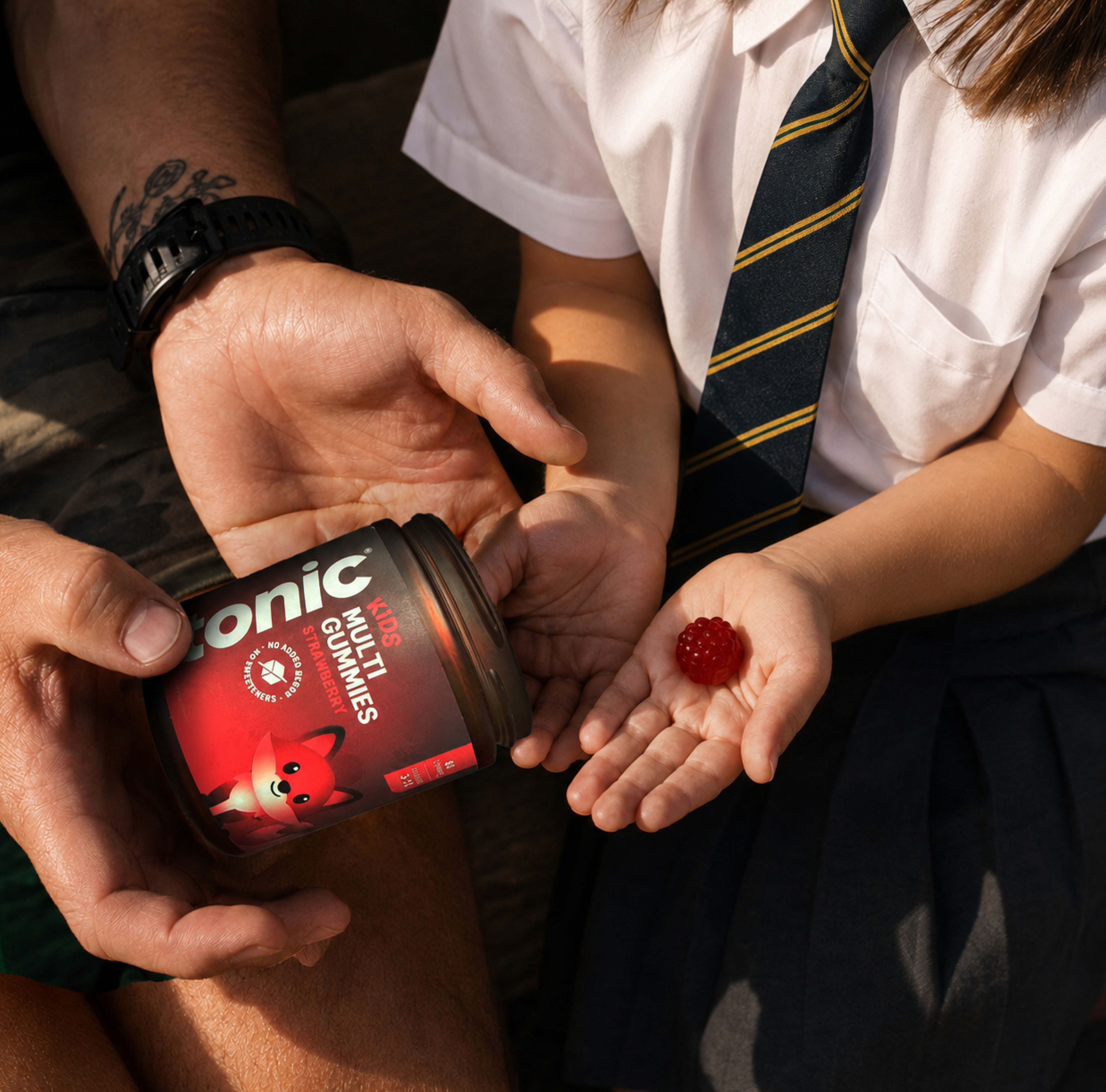
It's not just lunchboxes that are in need of a sugar makeover. Most kids' multivitamins are gummies loaded with added sugar – which rather undermines the point.

Tonic's Kids range uses beetroot fibre instead of sugar, delivering higher doses of essential nutrients with no added sugar or artificial sweeteners. A simple daily habit that works alongside everything else you're doing – not against it.
This article is for informational purposes only and does not constitute medical advice. Please consult a qualified healthcare professional if you have concerns about your child's nutrition or health.



Leave a comment
All comments are moderated before being published.
This site is protected by hCaptcha and the hCaptcha Privacy Policy and Terms of Service apply.