


Which Vitamins Actually Help?
If your house is anything like mine, the first round of coughs and colds has already come through – and timed itself poorly! You might have experienced something similar… maybe one child comes home from school with a sniffle, and by the weekend someone else is sneezing, and you're standing in front of the kitchen cupboard wondering which supplement or herbal remedy support is worth choosing.
It's one of the questions I'm asked most in clinic at this time of year, so let's go through it honestly. Some nutrients have solid research behind them, others are still emerging, and none of them (sadly) will stop a cold in its tracks. My blog on why October is the time to start winter immunity covers the preparation side; this one is for when the bugs have already arrived.

Why We All Get Ill More in Winter
It's not just bad luck, and I wouldn't be too hard on yourself. An active immune system that can kill off bacteria and viruses, even if it slows you down for a while, is a really positive sign. One bug a year is nothing to worry about in general, but I would keep an eye if it feels like you're catching every bug going and take a long time to recover – that is worth looking into.
During winter, illnesses can ramp up because a few things stack up at once:
- Cold, dry air. Flu and some other respiratory viruses spread more easily in cold, low-humidity conditions, and dry indoor air may make it harder for your airways to clear viruses (think: the tiny hairs and mucus that act as your first line of defence).
- More time indoors. Closed windows, packed classrooms and shared offices are the perfect set-up for passing germs around.
- Less daylight. From October to March, the UK sun sits too low for our skin to make meaningful vitamin D, which helps regulate immune function.
- Busier and more tired. Darker mornings, shorter sleep (we should be getting slightly more at this time of year than in summer), and the crazy busy run-up to the festive season all add pressure.
Children tend to feel it most, partly because their immune systems are still developing, and partly because classrooms are, well, classrooms.
What Does the NHS Actually Say?
It's always worth starting with the official guidance, because it's a good baseline. The NHS advises everyone over the age of one to take a daily 10 microgram (400 IU) vitamin D supplement through autumn and winter. For children aged six months to five years, the NHS recommends a daily supplement containing vitamins A, C and D, and breastfed babies should get 8.5 to 10 micrograms of vitamin D from birth.
Beyond that, the NHS says most people can get what they need from a varied, balanced diet. I agree, in principle, this is the aim. But in reality, we don't eat a very balanced diet as a nation, and between fussy phases, busy weeks, and winter comfort food, nutrient gaps happen, and that's where supplements can earn their place.
The Nutrients Worth Knowing About

Vitamin D – the Strongest Evidence
Vitamin D has strong evidence for respiratory infections. A large analysis of 25 trials involving around 11,000 people found that vitamin D supplements reduced the risk of acute respiratory infections, with the biggest benefit in people who were low to begin with. A later update found a smaller but still protective effect, mainly with regular daily doses rather than large occasional ones. Given how many of us are low by the end of winter, I'd prioritise this one for the whole family.
There's also been an urgent call to redefine the UK threshold for vitamin D deficiency, raising it from under 25 nmol/L to under 50 nmol/L. As a clinician, I can't express how much I back this. A cut-off of 25 nmol/L has always seemed far too low to me. If you're testing, aim to be comfortably above 50 nmol/L; in my opinion, around 100 nmol/L at this time of year is a good place to be. With autoimmune conditions, closer to 150 nmol/L may be better still. Seek personal advice from a healthcare professional if you have any questions.
Vitamin C – Steady Rather Than a Quick Fix
Vitamin C supports the normal function of immune cells and acts as an antioxidant, but evidence that it prevents colds is modest. A Cochrane review found regular vitamin C didn't reduce how often most people caught a cold, though it did shorten colds by around 8% in adults and 14% in children, when taking 1–2g a day. Starting it only when you already feel rough showed no consistent benefit, so you may want to consider starting it more consistently now. Good food sources include kiwi, citrus fruit, peppers, broccoli and berries.
Zinc – Where Timing Matters
Zinc is essential for immune cells to develop and work properly, and it helps maintain the barriers (think: the lining of your nose and throat) that keep pathogens out. A 2024 review notes that even a mild shortfall can reduce the immune system's ability to respond to viruses, and that supplementing older adults, who are more likely to run low, has been linked to fewer infections. Zinc lozenges taken within 24 hours of symptoms have been linked to colds lasting about a third less.
However, more isn't better with any nutrient – the body likes balance. The NHS advises adults not to exceed 25mg a day from supplements, and I'd support this as zinc competes with copper for absorption. Food sources of zinc include shellfish, red meat, pumpkin seeds and lentils.
Selenium – the Quiet One
Selenium helps the body mount a normal immune response and protects cells from oxidative stress. UK soils are naturally low in it, so intakes can fall short. Two or three Brazil nuts, fish, eggs, and whole grains go a long way toward meeting our body's selenium needs. More on both zinc and selenium minerals here.

Reishi – for Immunity and Wellbeing
Reishi (Ganoderma lucidum) is often described as an adaptogenic mushroom whose beta-glucans appear to modulate immune activity rather than simply stimulate it – and that is a good thing. "Boosting our immune system" is a phrase of the past; we all want immune systems that can modulate their responses reasonably.
In a 12-week randomised, placebo-controlled trial in 135 healthy adults, 200mg a day of reishi beta-glucan was linked to higher levels of key immune cells, including a notable rise in natural killer cell activity (think: the cells that help clear virus-infected cells). Its benefits may reach beyond immunity, too. In an eight-week trial of adults, those taking a reishi extract reported less fatigue and a greater sense of wellbeing than those on a placebo.
Do Adults and Children Need the Same Thing?
Partly. The core nutrients overlap because we all live in bodies operated by human biology. But it's fair to say the details differ.
- Dose. Children need smaller amounts and have lower safe upper limits, so always follow the age guidance on the label.
- Format. Most children (and plenty of adults!) find gummies or drinks easier than tablets. Gummies look and taste like sweets, so keep them out of reach.
- Ingredients. Some adult formulas include mushrooms or herbs, like reishi, that aren't appropriate for children.
- Combined totals. If anyone takes more than one supplement, add up the vitamin D, vitamin A and zinc across both rather than assuming more is better.
What Else Actually Moves the Needle?
Supplements play a supporting role, especially when dietary gaps exist, but everyday habits often do more of the heavy lifting and build the foundation our whole health and wellbeing rests on.
- Handwashing. A Cochrane review of randomised trials found good hand hygiene probably reduces respiratory illness by around 14%. Not glamorous but pretty obvious and it works!
- Movement. Adults who did aerobic activity five or more days a week had about 43% fewer days with cold symptoms.
- Stress. Higher psychological stress is linked to a greater risk of catching a cold, so real downtime matters.
- Gut health. A study found that a diet rich in fermented foods (think kefir, live yoghurt, sauerkraut, and kimchi) increased gut microbiome diversity and lowered inflammation markers.
- Sleep. In a study, adults sleeping less than seven hours a night were nearly three times more likely to catch a cold after virus exposure than those sleeping eight or more hours. Even the best supplement stacks will struggle to cover up for lack of sleep.
When to See a GP
Most winter colds clear up on their own within a week or two, but it's always fine to ask for advice, and NHS 111 is a good place to start.
Adults
Speak to your GP if:
- Symptoms last more than three weeks, or suddenly get worse
- You have breathing difficulties, chest pain or a very high temperature
- You have a long-term condition or a weakened immune system
Children
Seek advice if:
- A baby under three months has a temperature of 38°C or higher, or a baby aged three to six months has a temperature of 39°C or higher
- Your child shows signs of dehydration, such as fewer wet nappies, no tears or sunken eyes
- They seem unusually drowsy, floppy or aren't feeding
- Something just doesn't feel right; trust your instincts
Call 999 if your child is struggling to breathe or has a rash that doesn't fade when you press a glass against it.
Putting It Together: a Winter Routine for the Whole Family
None of this needs to be complicated, because that adds stress, and we've already read that it doesn't help our immune system.
For many families, a winter routine could look something like this…
Mornings start with a blood-sugar-balancing breakfast built on protein, fibre, and colour. Think:
- 3 eggs on sourdough toast with sautéed greens, avocado and sauerkraut on the side, sprinkled with pumpkin seeds
- Rolled-oat porridge with Greek yoghurt, stewed apples, cinnamon and crushed pecans
- Egg muffins baked with peppers, spinach, and grated cheddar, served with a handful of berries (make a batch on Sunday for grab-and-go breakfasts all week; ideal for little hands on school mornings)
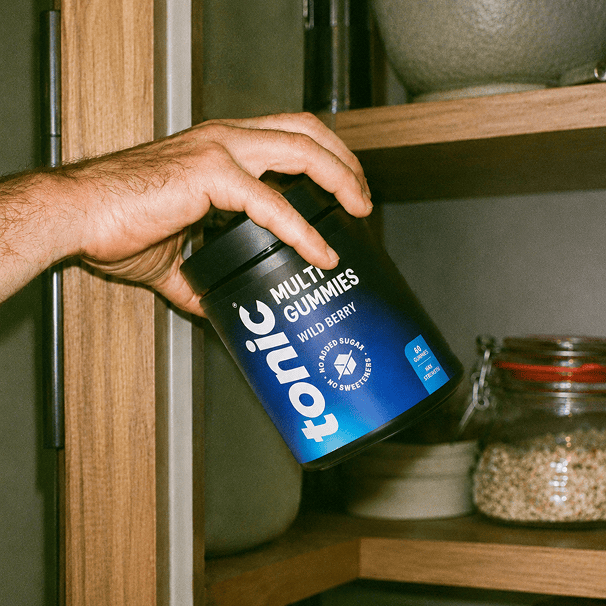
Children can take Tonic Kids Immunity Gummies to cover their vitamin D needs when bugs are doing the rounds at school, while also getting vitamin C, zinc, elderberry and 3g of fibre.
Adults can have a glass of Immunity + Vitality (raspberry and lemon is my flavour of choice), which covers vitamin C, D3, zinc, selenium and reishi while also supporting hydration.
During the day, it's about the simple things. Wash hands as soon as everyone gets home, take a walk in whatever daylight you can find, and lean into Scandinavian traditions with fermented food regularly on the plate.
Evenings are for winding down, with screens off a little earlier (the sun sets earlier, and we can mirror that, since evening screen light can delay melatonin and the body clock) and a bedtime that protects those seven to eight hours.
Children need more sleep than adults anyway, and there's some evidence we all may need a little extra at this time of year. Women, especially through hormonal shifts like perimenopause, may notice it too. Follow nature's lead.
As ever, food comes first. Supplements are there to fill genuine gaps, not to replace a plate with a decent variety of fruit, vegetables, protein and fibre-rich carbohydrates.

This article is for informational purposes only and does not constitute medical advice.
About the Author
Natalie Louise Burrows is a registered nutritional therapist (BANT, CNHC) and clinic director at Integral Wellness.

Leave a comment
All comments are moderated before being published.
This site is protected by hCaptcha and the hCaptcha Privacy Policy and Terms of Service apply.