

What to Pack for Travel, Energy and Family Wellbeing
Packing for a holiday tends to follow a familiar pattern. Sunscreen goes in, passports are checked three times, someone forgets their phone charger, and health usually gets an afterthought somewhere between the sunglasses and the travel insurance. By day three abroad, you're exhausted, someone has a stomach upset, the kids are overtired, and you're wondering why holidays sometimes feel harder than they should.
A little preparation makes a disproportionate difference. This isn't about overpacking a wellness kit or turning your hand luggage into a pharmacy. It's about the handful of things that genuinely help your body – and your family's bodies – stay well when routines change, food is different, sleep is disrupted, and the demands of travel are higher than usual.
Why Your Health Routine Changes on Holiday
At home, most of us have a rhythm without realising it. We sleep at similar times, eat similar meals, drink similar amounts of water, and move in familiar ways. Travel disrupts all of that at once: time zones shift, air conditioning dries everything out, unfamiliar food challenges the gut, and the excitement (or stress) of it all taxes the nervous system in ways a normal Tuesday simply doesn't.
On a long-haul flight alone, cabin humidity is so low that you can lose up to two litres of water before factoring in alcohol, caffeine or the high-sodium meals that tend to come with air travel. Add heat, a change in diet, disrupted sleep and a change in physical activity, and it's easy to see why the body needs a little more support on holiday than it does at home.
None of this is a reason not to travel – go and have a blast. But it does explain in part why so many people return from holiday feeling like they need another holiday. A few essentials, packed with intention, can change that.
The Healthy Holiday Essentials Checklist
Reusable Water Bottle
The single most useful thing in your bag. Cabin air on flights has very low humidity; hot weather accelerates fluid loss; and buying bottled water for everyone at restaurants for two weeks is both expensive and generates a lot of plastic waste. A good insulated bottle keeps water cool, removes the excuse not to drink, and is the foundation of everything else working properly.
Get one with a wide enough opening to add ice, and make sure every family member has their own. If drinking from the tap is a no-go, buy the large 5-litre bottles and fill up each morning.

Electrolytes or Hydration Support
Water alone doesn't fully rehydrate you. Hydration comes from water and minerals – electrolytes. On a long travel day or in high heat, plain water without electrolytes can actually dilute mineral concentrations in the blood rather than restoring them.
Tonic's Energy + Hydration is compact, travel-friendly, and provides electrolytes alongside B vitamins for energy metabolism – ideal for long travel days, hot weather and higher activity.
Travel-Friendly Vitamins
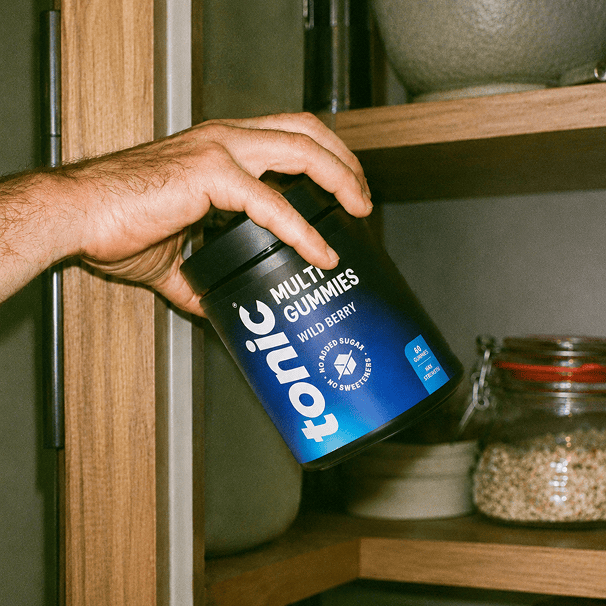
Holiday is not the time to skip your supplement routine; if anything, it's when your body needs consistent support most. New environments, more social contact, a variable diet and disrupted sleep all increase demand on your immune system and energy reserves. Decant what you need into a small pill organiser rather than carrying full bottles.
Priorities for most people:
- Vitamin D – especially if travelling somewhere cloudy, or if you tend to stay in the shade
- Vitamin C
- Magnesium
- Any daily essentials for your personal needs
Starting immune support a week before travel, rather than the night before departure, gives your body a better foundation. Illness is commonly picked up on flights before you even reach your destination.
High-Protein Snacks
Airport food is largely overpriced carbohydrates. Service stations on road trips aren't much better. Pack nuts, seeds, nut butter sachets, oatcakes, protein bars with a clean ingredient list, and dried fruit in small portions. These keep blood sugar steady during long travel days and remove the desperation that leads to poor choices when you need good nourishment. We've written a full guide to healthy snacks for families here.
Sun Protection
Mineral suncream all the way. We've covered the details of what to look for, what to avoid, and how to apply it correctly in our suncream guide.

Sleep Mask and Earplugs
Underrated, inexpensive, and genuinely impactful. New environments, unfamiliar sounds, varying light levels, and earlier sunrises in summer can all significantly disrupt sleep. A sleep mask costs almost nothing and removes one variable entirely. For children, a white-noise app or travel-sized device can help recreate the familiar sound environment of home, making it easier to settle into an unfamiliar room.
Hand Sanitiser and Wipes
Travel exposes you to significantly more surfaces, crowds, and shared spaces than daily life. A small hand sanitiser and some antibacterial wipes are practical rather than anxious – particularly useful on planes, at airports, and when travelling with young children who touch everything and then immediately put their hands in their mouths.
Mini First-Aid Kit
Plasters, pain relief, tweezers, antihistamines, bite cream or defence spray, something for an upset stomach, and any prescription medication. If you're travelling with children, add child-appropriate pain relief, a thermometer and any regular medication they take.
Travel Documents and Medication
Passports, insurance documents, vaccination records where needed, and any prescription medication in its original packaging with a letter from your GP for airport security. GOV.UK foreign travel advice covers the documentation side thoroughly – especially helpful if you're travelling somewhere outside Europe. Wherever you're going, photograph key documents and store them on your phone as a backup.
Essentials for Flights, Road Trips and Long Travel Days
Hydration Support
Drink consistently throughout any long journey – don't wait for thirst. On flights, the combination of low humidity, cabin pressure, and recycled air accelerates dehydration considerably faster than sitting at home would. Avoid relying on caffeine or alcohol to pass the time; both accelerate fluid loss and compound the dehydration that travel already causes. A 500ml bottle of water per hour of flying is a reasonable target.
Balanced Snacks
What you eat on a long travel day sets the tone for how you feel on arrival. Protein and fibre keep energy steady; sugar and refined carbohydrates cause the spike and crash that makes a long journey feel even longer. Pack your own where possible, and treat the airport or service station snack as a last resort rather than the plan.
Movement Breaks
On flights, get up and walk the aisle every hour or so. On road trips, stop every couple of hours for even a short walk – ten minutes outside is enough to reset circulation and reduce the stiffness and fatigue that prolonged sitting causes. This is particularly important for children, who find extended stillness genuinely difficult.
Immune Support
Airports, planes and shared spaces are environments where viruses and bacteria are concentrated and circulating. Tonic's Immunity + Vitality, with vitamin D, vitamin C and zinc, is worth starting a week before travel and continuing throughout. Don't wait until something feels off to start supporting your immune system – by then, it's already playing catch-up.
Focus and Calm for Travel Days
For adults managing logistics, delayed flights, overexcited or overtired children, and the general low-level stress of moving a family from one place to another, having something that supports calm without sedation is genuinely useful. Tonic's Rest + Recover, with magnesium, ashwagandha, and lemon balm, can help the nervous system manage the cumulative stress of a long travel day. We've written more about how these adaptogens work here.

Healthy Holiday Essentials for Kids
Kid-Friendly Snacks
The same principle applies as for adults, but with more planning. Children's blood sugar is less stable, and a hungry, overtired child on a delayed flight is an experience no one wants. Pack more than you think you need, in individual portions where possible, and include options that don't require refrigeration and won't melt in a bag.
Water Bottle
Children are more vulnerable to dehydration than adults and less reliable at recognising thirst. A named, accessible water bottle that they're responsible for makes hydration a habit rather than a prompt – children are considerably more likely to drink from something that belongs to them.
Travel Games and Screen Breaks
Screens are fine on long journeys – don't let anyone make you feel guilty. But alternating with physical games, colouring, audiobooks, or simple conversation reduces overstimulation and makes transitions in and out of travel time easier. Children who have been staring at a screen for five hours straight tend to arrive at a destination dysregulated in a way that takes the whole first evening to resolve.
Kids Vitamins or Routine Support
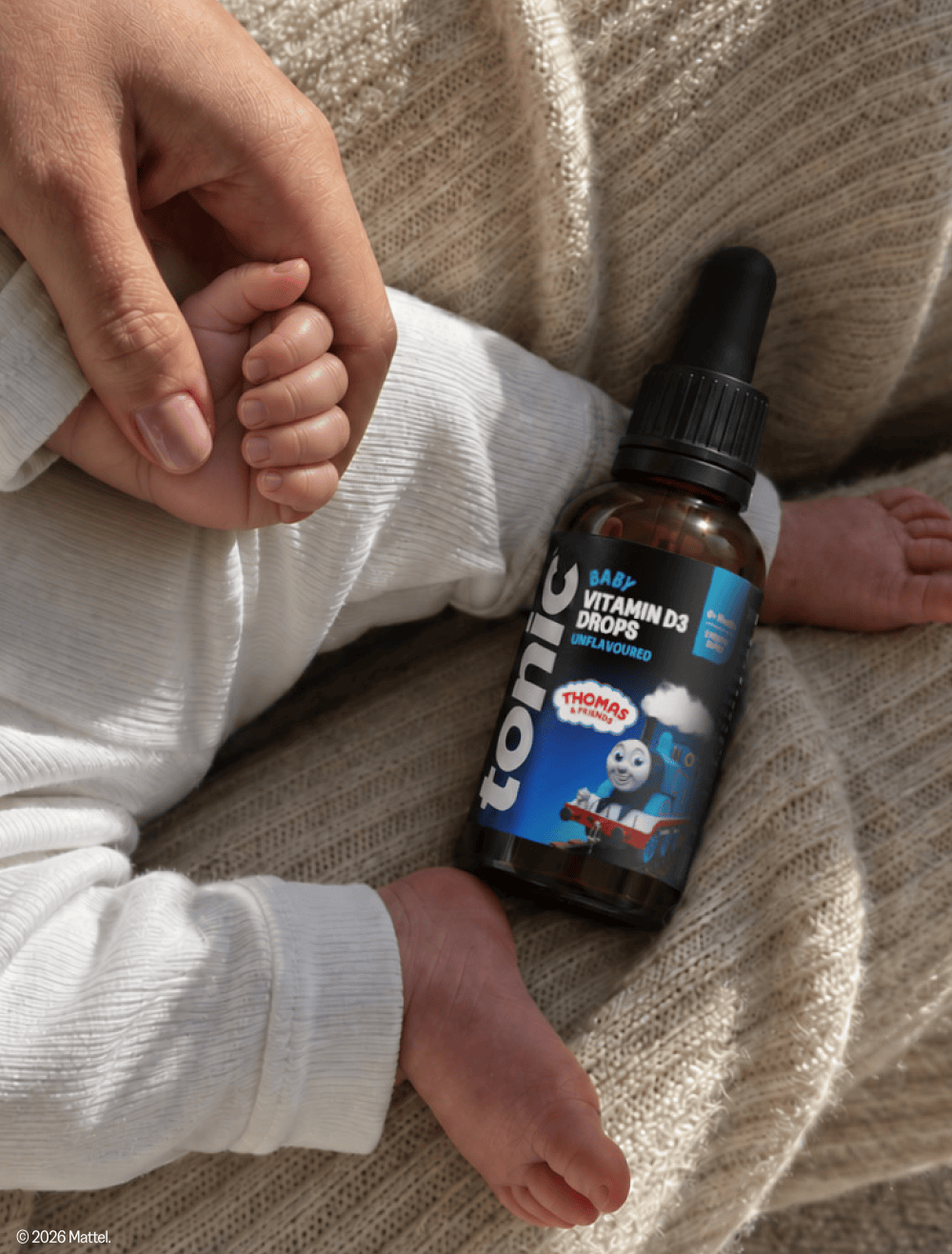
Keeping the supplement routine consistent during travel helps maintain nutritional foundations when diet is more variable and sleep is less reliable. Tonic's Kids range is designed for exactly this: compact, easy to take, and formulated for children's specific needs at different ages. Pack them somewhere accessible rather than in checked luggage so the routine doesn't slip on the first day.
Comfort Items for Sleep
New environments are genuinely hard for children to settle into. A familiar blanket or pillow, a white noise app on aeroplane mode, a travel blackout blind for the cot, or simply a comfort toy can make the difference between a child who settles in twenty minutes and one who's still awake at midnight.
What to Pack for Energy on Holiday
Energy tends to dip mid-holiday, particularly around day three or four, when the initial excitement settles and accumulated travel fatigue catches up. Long days in the sun, more or less physical activity than usual, disrupted sleep, and variable meals all deplete the reserves the body normally runs on.
Tonic's Energy + Hydration supports electrolyte balance and B vitamin intake – useful on active sightseeing days, beach days with high sun exposure, or any day when food options haven't been as balanced as usual. For older children and adults who need to maintain focus during long days out, Focus + Mind supports cognitive clarity without stimulants.
What to Pack for Immune Support
The immune system works harder during travel – new environments, new bacteria, disrupted sleep, alcohol, variable food, and the physical demands of moving around all increase its workload. Sleep deprivation and stress suppress immune function, and travel delivers both in varying quantities.
Immunity + Vitality provides consistent immune support throughout a trip. Start it before you leave, not when you start to feel run down, and continue it for a week or so after returning – post-holiday illness is common precisely because the immune system has been under sustained pressure.
What to Pack for Rest and Recovery
Poor sleep on holiday is surprisingly common and surprisingly underestimated in its impact. Unfamiliar beds, different temperatures, later nights, early starts, and different light environments all disrupt the sleep patterns that normally allow the body to recover.
Rest + Recover with magnesium, ashwagandha and lemon balm, supports nervous system recovery and sleep quality without grogginess – take it in the evening as part of a simple wind-down routine. For younger family members, Kids Calm supports nervous system function on overstimulating or unsettled days.
What to Pack for Digestion and Routine Changes
Travel consistently disrupts gut function, and it's one of the things people are least prepared for. Different food, different water, less fibre than usual, more restaurant meals, disrupted meal timing, less movement, and the background stress of being away from home all affect digestion in ways that range from mildly uncomfortable to genuinely holiday-derailing.
- A probiotic taken consistently before and during travel can help maintain gut balance amid travel disruptions.
- Prioritise fibre where you can when eating out – salads, vegetables, legumes and whole grains.
- Stay well hydrated; dehydration is one of the most common and least-considered causes of holiday constipation.
- If an upset stomach does occur, rehydration sachets with electrolytes are considerably more effective than plain water at restoring balance quickly.
We've written more about gut health and supporting the microbiome here.
What Not to Overpack
The wellness section of a pharmacy before a holiday can become a rabbit hole. You don't need every supplement you own, a portable blender, a full selection of herbal teas, or a carry-on dedicated entirely to health products.
Pack what you genuinely use at home, in travel-friendly sizes, and leave the aspirational extras behind.
Priorities:
- Hydration support
- Daily vitamins
- Immune support
- Something for sleep
- A plan for snacks
- A basic first-aid kit
Everything else is optional, and most things can be sourced locally if genuinely needed.
How to Build a Simple Holiday Wellness Routine
The goal isn't to replicate your home routine exactly – that's neither realistic nor the point of a holiday. It's to maintain enough consistency that your body doesn't spend the entire trip adjusting, and enough flexibility that you actually relax.
A simple framework that travels well:
- Morning: water with electrolytes, daily vitamins with breakfast, sunscreen before going out.
- During the day: regular fluids, balanced snacks alongside any treats, movement built into whatever you're doing.
- Evening: a lighter meal if the day has been heavy, Kids Calm Gummies or Rest + Recover before bed if sleep has been difficult, screens off reasonably early for children and adults alike.
Keep it that simple. The supplement routine doesn't need to be perfect, the diet doesn't need to be flawless, and one late night or ice cream-heavy afternoon doesn't undo a week of good habits. This is a holiday, and health encompasses new experiences and plenty of fun as much as it does good nutrition, hydration and sleep.
About the Author
Natalie Louise Burrows is a registered nutritional therapist (BANT, CNHC) and clinic director at Integral Wellness – a nutrition and health clinic specialising in cardio-metabolic health. Along with her clinic team of nutritionists, they help men and women regain their energy, control their cravings and avoid and reverse type 2 diabetes. They also address health conditions such as high blood pressure, high cholesterol, insulin resistance, fatty liver and heart disease, and weight challenges.
This article is for informational purposes only and does not constitute medical advice. If you have concerns about your health or your family's health while travelling, please consult a qualified healthcare professional.


Leave a comment
All comments are moderated before being published.
This site is protected by hCaptcha and the hCaptcha Privacy Policy and Terms of Service apply.